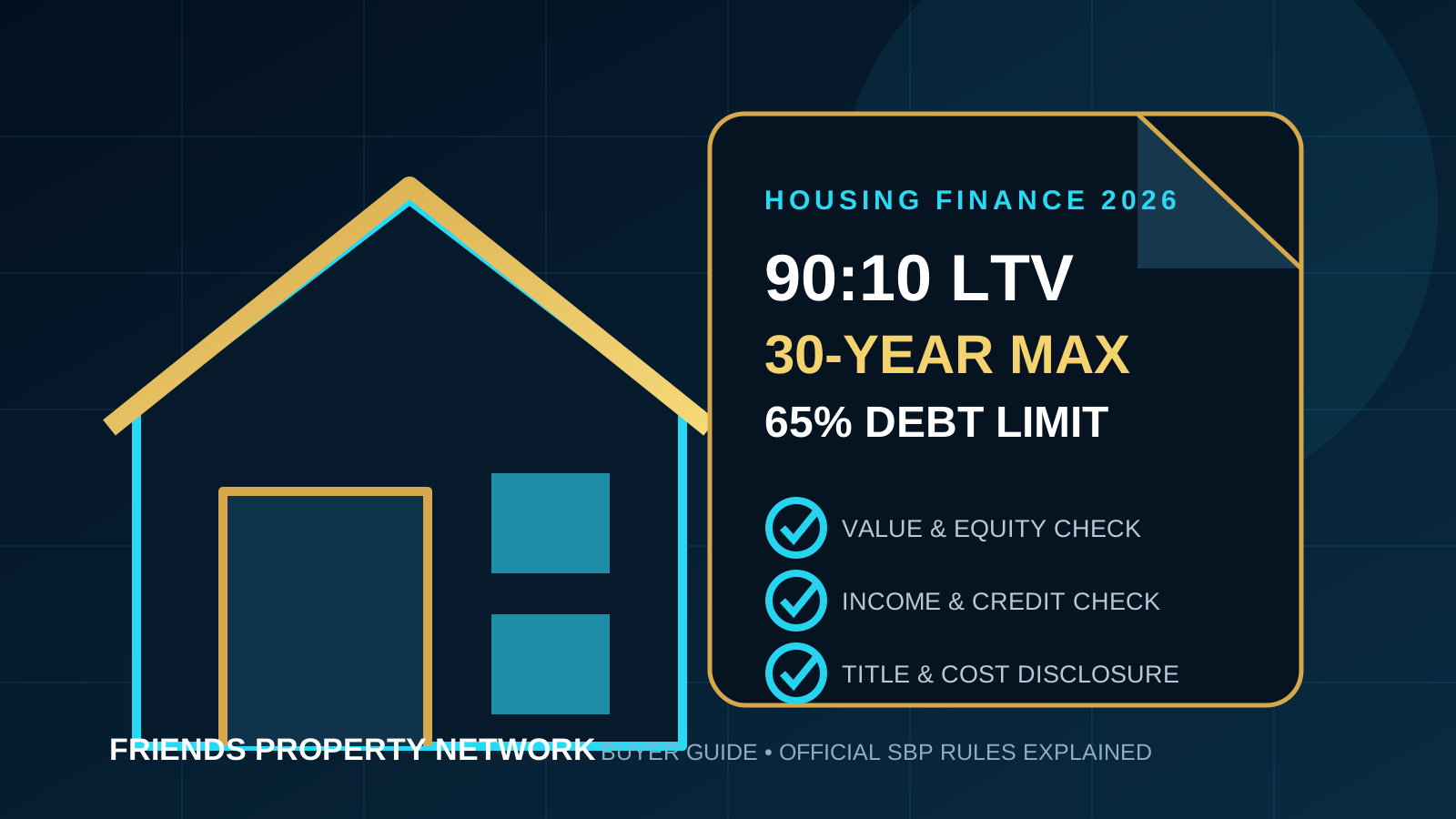
State Bank of Pakistan's revised housing-finance regulations took immediate effect on 18 August 2026. FPN explains the 90:10 maximum loan-to-value ratio, 65% debt-burden ceiling, 30-year maximum tenor and the documents and disclosures a homebuyer should verify before accepting a bank offer.
Swipe or scroll through all 1 images. Official documents are unedited; planning concepts and contextual images are clearly labelled.
01Original FPN buyer-guide visual • official SBP circular controls
Verified figures
SBP housing-finance limits effective 18 August 2026
These are prudential ceilings. A bank may approve a smaller amount, shorter tenor or lower LTV after income, credit, title and valuation checks.
Rule
Regulatory position
Buyer implication
Maximum loan-to-value
90:10
The borrower must fund at least 10% of the bank-accepted property value; valuation gaps and charges may require more cash.
Debt-burden ratio
Up to 65%
Total monthly housing and consumer-finance payments cannot exceed 65% of net disposable income.
Maximum housing tenor
30 years
Actual tenor depends on age, income stability, product policy and repayment capacity.
Renewable-energy finance
Up to 10 years
This shorter ceiling applies where renewable-energy finance is part of the housing facility.
Low-cost housing definition
Up to PKR 1 Crore
Up to 5 Marla house or 1,000 sq.ft. apartment; rural house may be up to 10 Marla, subject to the value ceiling.
Small housing facility
Up to PKR 50 Lakh
Where applicable, a land-record lien and PLRA Green Property Certificate or provincial equivalent may support the security process.
Verified figures
Property valuation and document treatment
The bank's accepted value—not the seller's asking price—drives the LTV calculation. Buyers should obtain the written valuation and full cost disclosure.
Facility/property value
SBP treatment
What to obtain
Above PKR 1 Crore
At least one PBA-approved valuer
Valuation report, title verification, sanctioned/approved documents and bank checklist.
Up to PKR 1 Crore
Bank may assess internally
Written assessed value and an explanation of any difference from the agreed purchase price.
Similar units in one society/colony
A single-unit valuation may support comparable units
Confirm that the comparison genuinely matches location, type, size, condition and legal status.
Buyer questions
Frequently asked questions.
Can a buyer automatically get 90% housing finance?+
No. The 90:10 ratio is a regulatory maximum. A bank can require a larger equity contribution or decline the application after credit, income, valuation, title and policy checks.
What is the maximum home-loan tenor under the 2026 rules?+
The maximum housing-finance tenor is 30 years. Renewable-energy finance within the framework has a maximum tenor of 10 years.
How is affordability measured?+
Monthly amortization for housing finance plus other consumer finance cannot exceed 65% of the borrower's net disposable income. The bank still applies its underwriting rules.
Can informal-income applicants apply?+
The framework recognises simplified forms for formal salaried, formal business and informal-income persons, and refers banks to PBA proxy-income models where applicable. Recognition does not guarantee approval.
What must the bank disclose?+
The borrower should receive the signed agreement, repayment schedule, annual statement and upfront disclosure of pricing, charges, insurance or takaful, APR and any prepayment penalty.
01
What the revised rules cover
The framework covers purchase of a house or apartment, construction on an owned plot, plot purchase combined with construction, extension or renovation, and eligible renewable-energy work. Plot-only speculation is not the same as plot-plus-construction housing finance, so applicants should match the product purpose to the bank's approved use.
02
Why 90:10 does not mean only 10% cash
The bank calculates finance against its accepted property value. If a seller asks PKR 1.20 Crore but the bank accepts PKR 1 Crore, even a 90% facility would be PKR 90 Lakh; the buyer must cover the PKR 30 Lakh gap plus taxes, transfer, valuation, legal, insurance or takaful and other disclosed charges. Treat 10% as the minimum regulatory equity ratio, not a complete cash requirement.
03
Income and affordability checks
The 65% debt-burden ceiling includes the proposed housing installment and other consumer-finance obligations. Applicants should calculate net disposable income after regular deductions, list every active loan or card obligation and retain evidence of income. The revised framework also recognises simplified forms and proxy-income approaches for eligible informal-income applicants, but banks still make the lending decision.
04
Title, mortgage and Green Property Certificate
Original title documents remain central and the bank must acknowledge receipt. The security may be a registered or equitable mortgage. For housing finance up to PKR 50 Lakh, the framework allows a land-record lien and PLRA Green Property Certificate where applicable, or an equivalent provincial arrangement. Buyers should verify that the certificate, land record, owner identity and exact parcel all match before payment.
05
Buyer checklist before accepting an offer
Ask for a written sanction letter showing the bank's property value, approved finance amount, tenor, markup basis, installment, all charges, insurance or takaful, prepayment terms and conditions before disbursement. Independently verify title, seller authority, approved use, society or authority status and the transaction documents; a bank approval is not a substitute for legal due diligence.
Compare the seller price with the bank-accepted valuation
Confirm the complete equity requirement and every non-financed charge
Check the installment against the 65% ceiling and a conservative household budget
Read variable-markup reset and prepayment clauses
Keep signed acknowledgements for original documents delivered to the bank
Do not pay a seller merely because a finance application is under review
06
Default and restructuring are serious consequences
The regulations set delinquency classifications beginning with Other Assets Especially Mentioned at 90 days past due, followed by substandard, doubtful and loss categories. Restructuring is restricted and does not erase credit consequences. Borrowers should maintain an emergency reserve and obtain written assistance before missed payments compound.
Verification note
Verified on 22 August 2026 against State Bank of Pakistan SH&SFD Circular No. 04 of 2026 and its official annex, issued and effective from 18 August 2026. The ratios and tenors below are regulatory maximums, not an entitlement to finance. Each bank remains responsible for credit assessment, property valuation, documentation, pricing and approval under its own compliant policy. Information may change after publication; always obtain the latest official document before acting.
Friends Property Network is not responsible for project delays, non-delivery, possession delays, escalation or developer-imposed charges, approval changes, investment loss or developer default. Conduct independent legal, financial and technical due diligence before investing.