FBR DNFBP Jurisdiction 2026: Which Office Covers Real Estate Agents?
FBR's final S.R.O. 1497(I)/2026, dated 2 September 2026, replaces the officer-and-jurisdiction table used to administer DNFBP regulatory powers. FPN maps the relevant Islamabad, Karachi, Lahore, Quetta and Khyber Pakhtunkhwa coverage for real-estate businesses.
Swipe or scroll through all 1 images. Official documents are unedited; planning concepts and contextual images are clearly labelled.
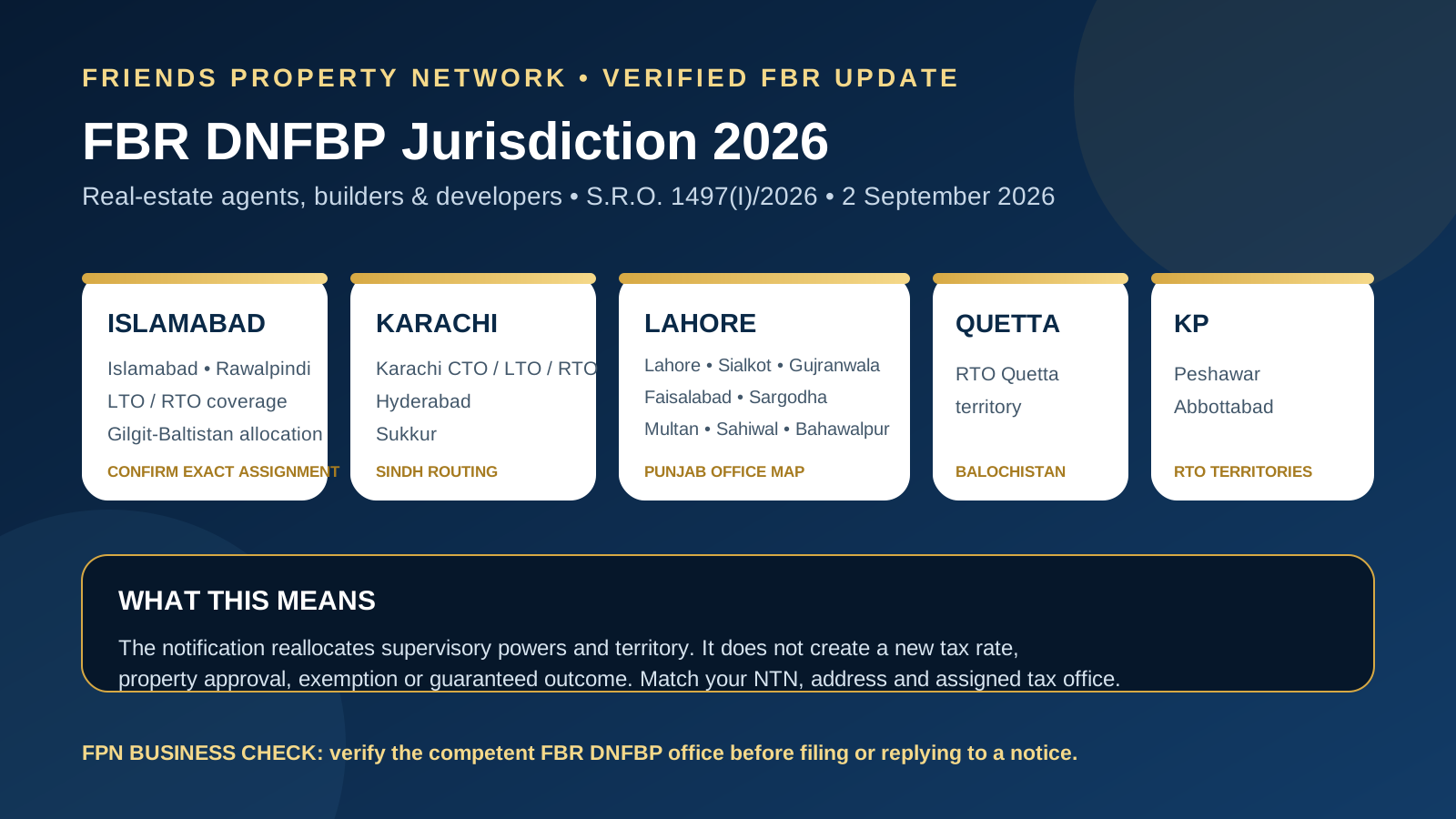
01Original FPN compliance map • based on FBR S.R.O. 1497(I)/2026 • confirm the exact assigned office
Verified figures
Practical DNFBP office map for real-estate businesses
The SRO allocates regulatory powers by FBR office and tax-office territory. This summary is for routing only; the Director General and directors may assign cases within the notified structure.
DNFBP office
Main territorial coverage stated in SRO 1497
Practical action
Islamabad
LTO Islamabad; RTO Islamabad and Rawalpindi; Gilgit-Baltistan coverage within the notified allocation
Match the business tax office and address before approaching the Islamabad DNFBP team
Karachi
CTO-I and CTO-II Karachi; LTO Karachi; RTO-I and RTO-II Karachi; Hyderabad and Sukkur
Karachi and Sindh businesses should identify the relevant Karachi or Hyderabad/Sukkur allocation
Lahore
CTO Lahore; LTO Lahore and Multan; RTO-I and RTO-II Lahore; Sialkot, Gujranwala, Faisalabad, Sargodha, Multan, Sahiwal and Bahawalpur
Punjab businesses should route by their assigned tax office—not simply by project location
Quetta
RTO Quetta territory
Confirm the registered business address and current RTO assignment
Khyber Pakhtunkhwa
RTO Peshawar and Abbottabad territories
Confirm whether the case is assigned through the director or an additional/deputy director
Verified figures
What changed—and what did not
The legal effect should not be expanded beyond the text of the notification.
Point
Verified position
Business implication
Jurisdiction table
Replaced in regulation 3
The competent officer or office handling supervision may differ from an older notice or assumption
Covered real-estate businesses
FBR separately identifies agents, builders, developers, housing societies and title-transfer entities within its DNFBP remit
Check whether the activity falls within the official definition and keep the registration profile current
AML/CFT duties
The SRO reallocates powers and territory; it does not repeal the underlying DNFBP obligations
Do not stop CDD, record-keeping, screening or reporting controls because the office map changed
Tax rates and project approvals
No new rate, exemption, NOC or property approval is created
Reject sales claims that present this administrative notification as a project endorsement or tax concession
Buyer questions
Frequently asked questions.
Does SRO 1497(I)/2026 apply to real estate agents?+
FBR's official DNFBP information includes real estate agents and also identifies developers, builders, housing societies and title-transferring entities within the regulated real-estate category. Application still depends on the statutory activity and facts.
What did FBR change on 2 September 2026?+
FBR substituted the table in regulation 3 that assigns DNFBP regulatory powers and territorial jurisdiction among the Directorate General and its Islamabad, Karachi, Lahore, Quetta and Khyber Pakhtunkhwa officers.
Which FBR DNFBP office covers Lahore businesses?+
The Lahore structure covers CTO Lahore, LTO Lahore, LTO Multan, both Lahore RTOs and the notified RTO territories of Sialkot, Gujranwala, Faisalabad, Sargodha, Multan, Sahiwal and Bahawalpur. Confirm the exact case assignment with FBR.
Does the notification create a new property tax or penalty?+
No. SRO 1497 is an administrative jurisdiction notification. It does not itself publish a new property-tax rate, project approval, exemption or blanket penalty.
What should a real-estate business check now?+
Match its legal name, NTN, registered address and tax-office assignment; retain DNFBP registration and AML/CFT records; and verify the competent office before submitting documents or replying to a notice.
01
The change is about regulatory jurisdiction
S.R.O. 1497(I)/2026 was issued on 2 September 2026 under section 6A of the Anti-Money Laundering Act, 2010. It replaces the table in regulation 3 of the 2020 DNFBP regulatory-powers regulations, allocating powers and territorial coverage among the Director General, directors, additional directors, deputy or assistant directors and inspectors.
02
Why it matters to property businesses
FBR's official DNFBP portal says the regulated real-estate category includes agents, developers, builders, housing societies and title-transferring entities. A jurisdiction mismatch can send a registration question, inspection response or compliance file to the wrong office and create avoidable delay. The relevant routing follows the notified FBR tax-office territory and assignment—not a dealer's informal understanding.
03
Lahore and wider Punjab routing
The Lahore directorate's notified coverage spans CTO Lahore, LTO Lahore, LTO Multan, RTO-I and RTO-II Lahore and the RTO territories of Sialkot, Gujranwala, Faisalabad, Sargodha, Multan, Sahiwal and Bahawalpur. Additional directors divide Lahore, central/northern Punjab and southern Punjab groupings within the table. A business should confirm its precise assignment before relying on this summary.
04
Islamabad, Karachi, Quetta and KP routing
The notification also maps Islamabad and Rawalpindi/GB coverage, Karachi plus Hyderabad and Sukkur, RTO Quetta, and the Peshawar and Abbottabad territories. The Director General retains nationwide jurisdiction and directors or additional directors may assign cases within their notified powers.
05
Compliance file to keep ready
The new office map does not replace the underlying AML/CFT framework. A real-estate business should keep a current, reviewable file and use the official FBR portal for sector-specific guidance.
DNFBP registration and current business/beneficial-owner particulars
NTN, legal entity records, registered address and tax-office assignment
Customer due-diligence and beneficial-ownership records
Risk assessment, internal controls and staff responsibility
Sanctions and prohibited-person screening evidence
Transaction records and any required STR/CTR escalation trail
Copies of notices, submissions and dated receiving evidence
06
Do not misread the notification
SRO 1497 does not validate a housing scheme, building, developer or agent. It does not change a unit's title, sanctioned plan, NOC status, tax valuation or return potential. Buyers must continue project- and property-level due diligence; businesses should obtain professional AML/CFT advice for their exact activities.
07
FPN compliance conclusion
Real-estate businesses should update their internal contact map and verify which FBR DNFBP office has jurisdiction before the next filing, inspection or notice response. This is a routing and supervisory update, not a new tax concession or approval certificate. FPN does not provide legal or tax representation; obtain advice from a qualified professional for the specific case.
Verification note
Verified on 3 September 2026 against Federal Board of Revenue S.R.O. 1497(I)/2026, issued in Islamabad on 2 September 2026 under section 6A of the Anti-Money Laundering Act, 2010. The notification substitutes the jurisdiction table in regulation 3 of the DNFBPs (Regulatory Powers and Functions) Regulations, 2020. FBR's official DNFBP introduction confirms that its regulated real-estate category includes agents, developers, builders, housing societies and title-transferring entities. This notification reallocates supervisory jurisdiction and officer assignments; it does not announce a new tax rate, property approval, exemption or blanket penalty. Businesses should confirm their exact assigned office directly with FBR before filing or responding to a notice. Information may change after publication; always obtain the latest official document before acting.
Friends Property Network is not responsible for project delays, non-delivery, possession delays, escalation or developer-imposed charges, approval changes, investment loss or developer default. Conduct independent legal, financial and technical due diligence before investing.