01The official position: Section 7E was omitted
FBR’s 8 September 2026 explanatory circular for Finance Act 2026 confirms the omission of Section 7E and the corresponding rate division. That official source establishes the present legislative position. It does not, by itself, prove that a particular taxpayer has a payable refund for an earlier year.
02The new development is a reported route for revisions and refunds
Business Recorder and Profit reported on 25 September that an FBR letter dated 23 September was sent to Chief Commissioners at Large Taxpayer Offices, Corporate Tax Offices and Regional Tax Offices. The reproduced direction says Section 7E return-revision requests should not be rejected and that, where revision creates a refund, the refund application should be processed expeditiously under the applicable law and procedure.
03Processing does not mean automatic payment
A headline saying “FBR will refund Section 7E” is incomplete. A taxpayer still needs to establish the correct tax year, the amount actually paid or collected, a valid revised-return position and the supporting refund application. Verification, adjustment against another liability, limitation questions and the timing of payment can depend on the taxpayer’s record and the procedure used by the competent office.
04Do not mix Section 7E with buyer and seller transfer taxes
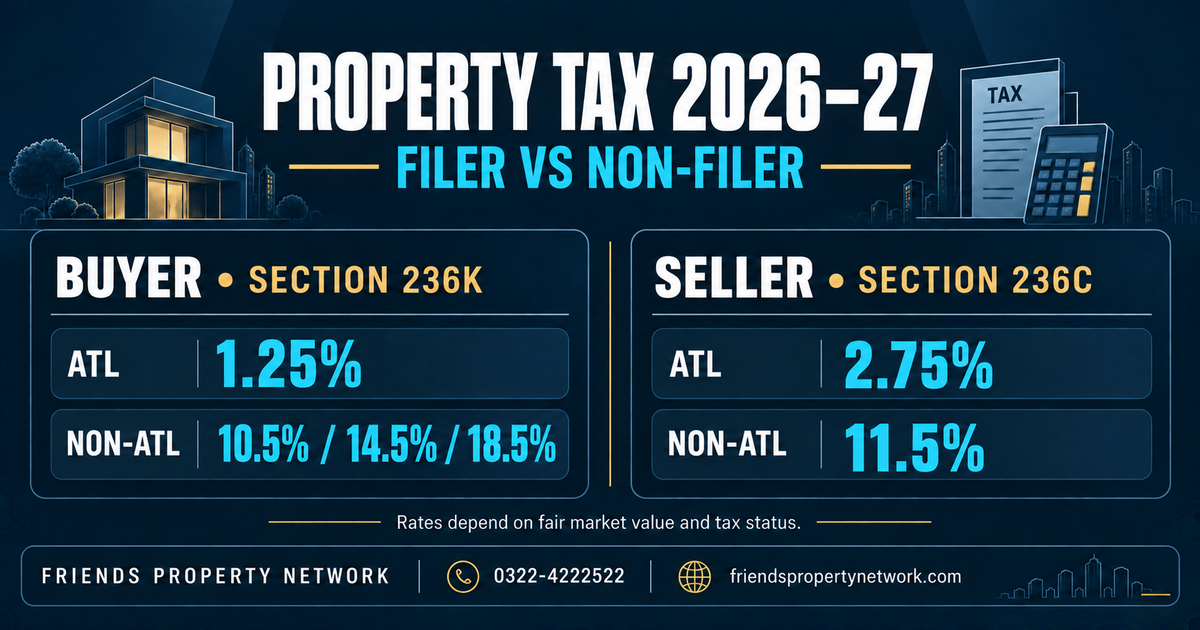
Section 7E concerned deemed income from capital assets. Section 236K is a purchaser-side advance tax and Section 236C is a seller-side advance tax collected in property transactions. FBR’s current Tax Year 2027 rate card, updated through Finance Act 2026, remains the public source for those transaction taxes. A Section 7E refund claim does not cancel a valid 236K or 236C obligation.
05A safer taxpayer workflow
Start with the original filed return and payment trail, then have a qualified adviser map the court/FBR position to the exact tax year. Request the underlying 23 September FBR direction or later official procedure, prepare the revised-return computation, file through the correct channel and preserve acknowledgement of the refund application. Do not pay an agent promising a guaranteed or immediate refund.
- Confirm that the amount was actually paid or collected under Section 7E
- Match the PSID/CPR and bank evidence to the relevant tax year
- Reconcile property disclosures with the original and proposed revised return
- Obtain the current return-revision and refund procedure in writing
- Keep every FBR acknowledgement, order and adjustment record
- Use a qualified tax adviser for taxpayer-specific eligibility and deadlines
06FPN conclusion
Section 7E’s omission is officially confirmed, and the 23 September refund-processing direction is credibly reported by two independent publications. The buyer-safe conclusion is narrower than “refunds are automatic”: affected taxpayers should assemble evidence and use the prescribed revision and refund route. FPN will update this page if FBR publishes the underlying letter, a form, a portal workflow or a broader procedure.
Verification notePublished 25 September 2026. FBR Circular No. 2 of 2026–27, issued 8 September, officially explains that Section 7E and the corresponding rate division were omitted through Finance Act 2026. The refund-processing development is based on two independent reports published 25 September that reproduce a 23 September FBR letter to Chief Commissioners Inland Revenue. FPN had not located that 23 September letter in FBR’s public circular directory at publication time. The reports state that Section 7E return-revision requests should not be rejected and that a refund application arising from a revised return should be processed expeditiously under applicable law and procedure. Eligibility, tax year, return-revision permission, payment evidence, limitation periods, adjustment, verification and payment remain taxpayer-specific. This article is general information, not tax or legal advice. Information may change after publication; always obtain the latest official document before acting.