01What FBR changed on 24 August 2026
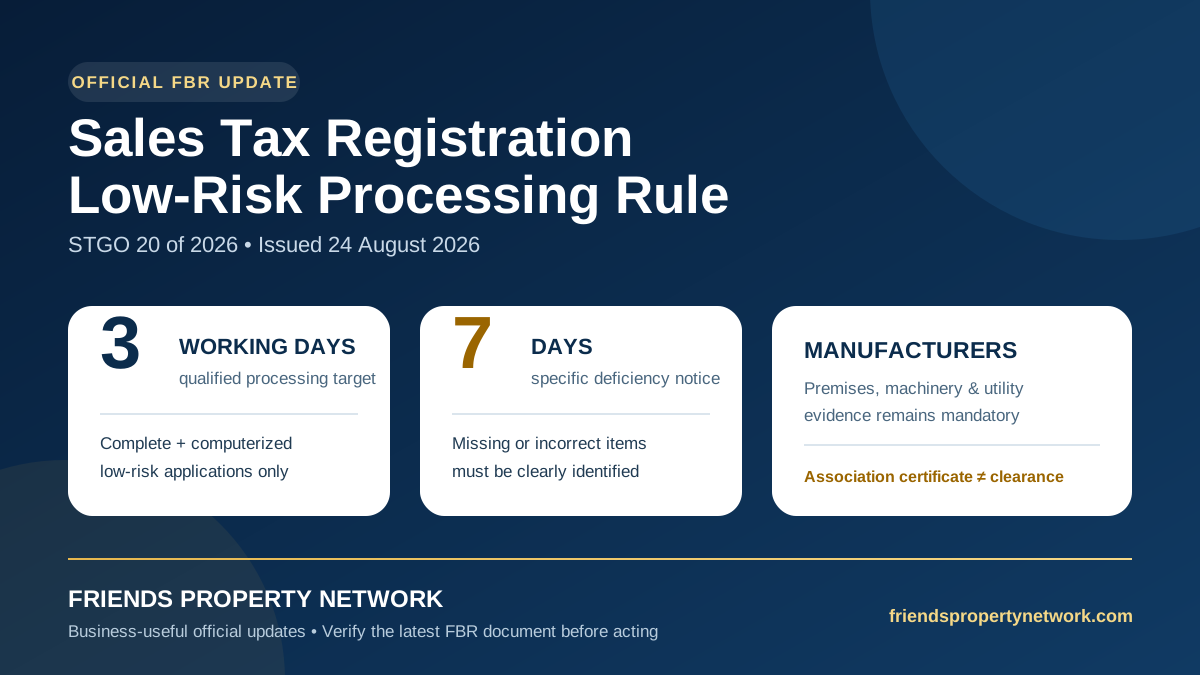
STGO 20 creates a clearer risk-based processing discipline for sales-tax registration applications submitted through IRIS. Low-risk applications that are complete and meet prescribed requirements should receive priority treatment. The order aims to reduce unexplained delay while preserving checks against fictitious or fraudulent registrations.
02Three working days is a qualified target, not automatic approval
The order uses three safeguards together: the computerized system must classify the case as low-risk, the application must be complete in all respects, and the three-day timing is stated as 'as far as practicable'. A business should not advertise itself as sales-tax registered until its official registration is actually granted and verifiable.
03Incomplete applications should receive a precise notice within seven days
Where information is missing, wrong or insufficient, FBR's system notice should state the exact deficiency, how to fix it and the compliance period. General or vague objections are not permitted. Once the applicant cures the deficiency and the application becomes complete, processing should continue without forcing a fresh start.
04Manufacturers have extra evidence and verification requirements
Manufacturers must support the electronic application with machinery and industrial utility-meter photographs as applicable. The order also obligates the concerned Local Registration Office to conduct required pre-physical verification under Rule 5(5) within three working days. A real operating address, identifiable factory and consistent utilities therefore remain essential.
05FPCCI-linked association certification is facilitation—not clearance
A relevant sectoral association may certify details it can verify, including manufacturing activity, identifiable premises, membership and alignment with the represented sector. The certificate must be electronically transmitted with the application. It does not replace the Sales Tax Act or Rules, grant a concession, or shield the applicant from FBR checks; an association can be held responsible for incorrect information.
06Practical checklist before submitting in IRIS
Treat the application as one reconciled evidence file. Names, NTN/CNIC, bank certificate, utility details, premises address and photographs should describe the same genuine business. Manufacturers should additionally prepare machinery, meters and association evidence where relevant.
- Use the current IRIS registration form and prescribed document list
- Check that bank, utility and premises records carry reconcilable names and addresses
- Upload clear, current and truthful photographs—not copied or staged evidence
- Save the submission acknowledgement and every computerized deficiency notice
- Respond within the stated period and retain proof of rectification
- Verify the granted STRN through FBR before printing it on invoices
07Risks businesses should not overlook
Low-risk status does not remove post-registration checks. FBR may verify later if new information points to fake documents, misrepresentation, non-existent premises or another irregularity. Businesses should also distinguish sales-tax registration from income-tax ATL status, provincial sales tax on services and sector-specific licensing before invoicing customers.
Verification noteVerified on 31 August 2026 against Federal Board of Revenue Sales Tax General Order No. 20 of 2026, issued in Islamabad on 24 August 2026. The order governs sales-tax registration under the Sales Tax Act, 1990 and Chapter I of the Sales Tax Rules, 2006. Its three-working-day language applies, as far as practicable, only to applications classified by the computerized risk system as low-risk, complete in all respects and compliant with prescribed requirements. It is not automatic registration, an exemption, an income-tax filer rule or protection from later verification. FPN provides a practical reading of the official order, not tax or legal advice. Information may change after publication; always obtain the latest official document before acting.